
Technology in Modern Nerf Blasters
Nerf blaster design and functioning have changed dramatically in recent years. Due to technological advances, these popular toys are now seen and used differently. Besides the Nerf things, our website covers Nerf Guns and the best laser tag game set.
The first Nerf blasters were spring-activated foam dart guns in the late 20th century. These toys have evolved into complex gadgets with advanced technology that improves performance, safety, and user experience. Technology has changed these popular toys from foam dart shooters to high-tech blasters.
Automated firing mechanisms are a major Nerf blaster innovation. Earlier variants could have been faster and more efficient due to manual loading and firing. However, modern blasters have battery-powered motors for fast fire. This improvement improves gameplay and replicates a more realistic, action-packed environment.
Improved battery technology affects Nerf Blasters’ performance. Rechargeable lithium-ion batteries have more extended play periods and constant power output than alkaline batteries. Rechargeable batteries are more eco-friendly than disposable ones; thus, this trend fits.
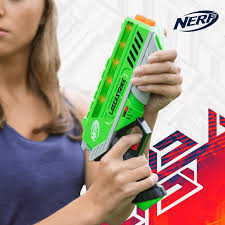
Electronic scoring methods in current Nerf blasters are intriguing. These sensors detect impacts and display scores, making Nerf matches more competitive. This feature combines Nerf’s physical motion with the accuracy of computerized scoring, drawing substantially from laser tag technology.
Technological advances have improved design and ergonomics. Blasters may be precisely modeled and tested before production using CAD software. Ergonomic designs are easier to handle and utilize, especially for younger players. 3.D printing lets fans make bespoke Nerf parts and accessories, personalizing their experience.
The safety of any toy has been dramatically improved by technology. Safety materials have been developed for darts and blasters. For instance, foam darts have softer tips and materials to reduce impact. To ensure safe play, blasters have safeguards to prevent accidental shooting.
Smartphone Integration improves Nerf blaster interactivity. Some models have Bluetooth connectivity, letting players track their performance, set virtual targets, and fight in AR. This mix of digital technology with physical play shows how modern technology blurs entertainment boundaries.
The video game’s impact on Nerf Blasters is clear. Video game guns have influenced the design and usefulness of several modern variants. Nerf’s cross-media synergy draws video game fans and enhances the play experience by bringing digital components to life.
Technology is essential for marketing and community interaction. Online forums and social media have developed a global Nerf community—this community exchanges modifications, battle methods, and reviews, boosting Nerf blaster popularity and evolution. Users can provide direct feedback on Nerf’s website, which helps companies develop and innovate.
Future technologies like AI and machine learning could transform Nerf blasters. Imagine blasters that learn and play independently or mimic a player’s style. This may sound like science fiction, yet rapid technological development makes it possible.
Technology had a significant influence on the development of current Nerf blasters. Nerf blasters have evolved from foam-dart weapons to interactive toys. These improvements improve play and reflect technology and social changes. As technology advances, Nerf Blasters will offer even more fun and engaging experiences for all ages.
Outlook: Nerf Gun Development Trends
In the ever-changing toy industry, Nerf guns represent innovation and childhood pleasure. Many households utilize these blasters, which have evolved from foam dart launchers. It’s exciting to imagine the trends and technology shaping the next generation of Nerf weapons.
Innovative technology in toys is growing, and Nerf guns are no exception. Imagine Blasters connecting to smartphone or tablet apps for an immersive combination of physical and digital play. Smart blasters might measure ammo, hit accuracy, and virtual training modules to improve shooting skills. AR games that overlay digital targets and foes in the natural environment offer a seamless blend of video gaming and physical engagement, which is fascinating.
Sustainability is another central theme that may influence Nerf gun development. As environmental concerns grow, toymakers are researching eco-friendly materials and production methods. Future Nerf blasters may be biodegradable or recycled, lessening their environmental impact. Nerf weapons’ foam darts might use more sustainable materials without affecting safety or performance.
Customization is popular with consumers, especially younger ones. Future Nerf guns may be highly customizable. Imagine modular blasters where players can swap barrels, stocks, and grips to fit their playstyle.
Technical advances in propulsion could change how Nerf guns discharge darts. Magnetic levitation could launch darts faster and more accurately while decreasing blaster wear. In development, this technology could lead to high-performance Nerf Blasters that make playing more fun.
Toy designers emphasize connectivity and social play, and Nerf guns may follow suit. Players could form teams, synchronize blasters, and play organized with real-time scorekeeping, with future blasters having wireless connectivity. This could improve Nerf battles by fostering strategy, teamwork, and socialization.
Safety will remain a top priority in toy design. Nerf guns could be made safer using advanced sensor technology. Sensors could prohibit a blaster from firing if targeted at the wrong target or in a dangerous setting. Intelligent safety features protect users and provide parents peace of mind.
As the line between toys and video games blurs, Nerf guns may feature video game aspects. Blasters could have digital achievements, unlocked material, and online leaderboards to promote community and competition. Gamifying physical play may attract a new generation of gamers used to interactive, reward-based video games.
Ergonomics advancements may make future Nerf guns more accessible and comfortable for more users. Adjustable handles, ambidextrous designs, and lighter materials could make these blasters more accessible, allowing everyone to play regardless of age or aptitude.
Exploring new power sources is another innovative opportunity. As batteries improve, blasters may use longer-lasting, faster-charging batteries. This would save downtime and comply with the energy efficiency and sustainability trend, improving play.
In conclusion, Nerf guns have a bright future full of possibilities. These themes show a fast-changing landscape, from innovative technology integration and sustainability to customization and sophisticated safety measures. Nerf guns will evolve to offer new ways to play, compete, and interact as technology and consumer preferences change. The next generation of Nerf blasters will combine physical and digital play, represent innovation, and provide unlimited fun for all ages.